Deep Linking :- A Deeplink much like a traditional hyperlink on a webpage. It is composed of separate elements that make up what is referred to as a Uniform Resource Identifier (URI)/URL Schemes. The URL Schemes contains all the information that, when invoked, launches a mobile application with a specific screen. The URL Schemes Contain "ecommercebrand://" these type of word to redirect from safari to application.
Handling the opening of registered urls within your app
Now that you have ensured that deep linking is working, we need to handle the url used to launch the app. In it’s current state, your app can be launched using a simple url, but it can’t do much beyond that. To do more, we need to override the following function in AppDelegate:
Note that this is not present by default, and needs to be added. This function gets called every time your app is launched using the registered url-scheme. The passed in arguments are:
url: The complete url used to launch the app.
sourceApplication: The bundle ID for the application from which the url was called.
annotation: A property list object that can be used to pass additional info along with the url.
The format of the url is as follows: [scheme]://[host]/[path]
Breaking this down, we get:
scheme: The url scheme tells iOS what app to launch. Note that the url scheme should be registered with the device for it to be able to handle this (this is what we did in the previous section).
host: The host is analogous to a website/server name on the web. You can handle multiple hosts within your app.
path: The path enables you to provide additional information regarding the location within your app.
In general, you would use the host and path parameters to determine what the user intends to do.

The Right contents of this method largely depend on your needs, but for the purpose of this post, we will check the host and then based on the path, load a particular ViewController.
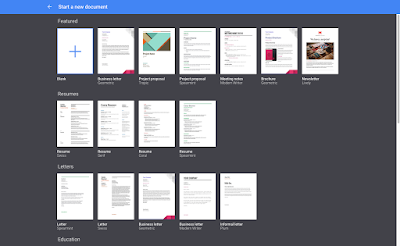
Google drive have just announced 60 new templates, if you haven’t checked out Google Drive templates yet, now is a good time. Making use of the many Google Drive templates or loading your own business or personal docs as a template for regular use can really save you time in Google Docs. Google drive added new document templates like ,newletter,Buisness letter,Resume templates,Essay,Class notes,Meeting Notes,Broucher,News Letter. To start using templates, log in to your Google Apps account and either visit the url drive.google.com/templates or select Create > From template… from your Google Docs or Google Drive list. Tip Update: From template has now been moved to the File menu when inside an open document. Click on File –> New –> From template . The advantage to this change is that choosing a template from an open spreadsheet will take you to all spreadsheet templates, but it seems l...
Brian Acton(WHATSAPP FOUNDER) were relatively unknown outside Silicon Valley tech circles. Now they are being discussed worldwide as California's latest billionaires. The internet is alive with the news that Mr Koum, 37, and Mr Acton, 42, have sold WhatsApp to Facebook for $19bn (£11.4bn) . In fact, before founding WhatsApp, both men were actually turned down for jobs at Facebook. This is an irony that has not been lost on internet commentators in light of the huge amount the social networking giant is laying out for WhatsApp. So what do we know about the men behind WhatsApp? 'Appreciate communication' Ukrainian Mr Koum emigrated to the US at the age of 16 with his mother, to escape "the political and anti-Semitic environment", according to Forbes . His childhood in the Ukraine was a seminal influence on the creation of WhatsApp, according to investor Jim Goetz. The service, with its emphasis on messaging privacy, was influenced ...

Comments
Post a Comment